

Introduction
Chicken noodle soup is one of the most universally loved comfort foods in the world. It is simple yet deeply satisfying, light yet nourishing, and familiar yet endlessly adaptable. Across generations and cultures, people have turned to this soup during cold winters, rainy evenings, and moments when comfort is needed most. A properly prepared bowl offers warmth, balanced nutrition, and a sense of home that few dishes can match. This article provides a detailed chicken noodle soup recipe designed to guide you through every stage of preparation, ensuring consistent flavor, texture, and aroma.
Unlike packaged or canned alternatives, homemade soup allows full control over ingredients and cooking methods. From choosing the chicken to seasoning the broth and cooking the noodles to perfection, every step plays an important role. This guide explains each phase clearly, helping beginners and experienced cooks alike create a wholesome and flavorful soup from scratch.
Understanding the Essence of Chicken Noodle Soup
At its core, chicken noodle soup is built on three essential components: a flavorful broth, tender chicken, and perfectly cooked noodles. Vegetables and herbs support these main elements by adding sweetness, depth, and aroma. The beauty of this dish lies in its balance. No single ingredient should overpower the others. Instead, they work together to create a comforting and harmonious bowl.
A well-made chicken noodle soup recipe relies on slow, gentle cooking rather than shortcuts. Allowing the chicken to simmer patiently releases natural flavors into the broth, while vegetables soften gradually without losing their structure. This process transforms simple ingredients into something truly satisfying.
Ingredients Needed for the Recipe
Choosing fresh, high-quality ingredients is the foundation of excellent soup. Each component contributes to the final taste and texture.
Core Ingredients
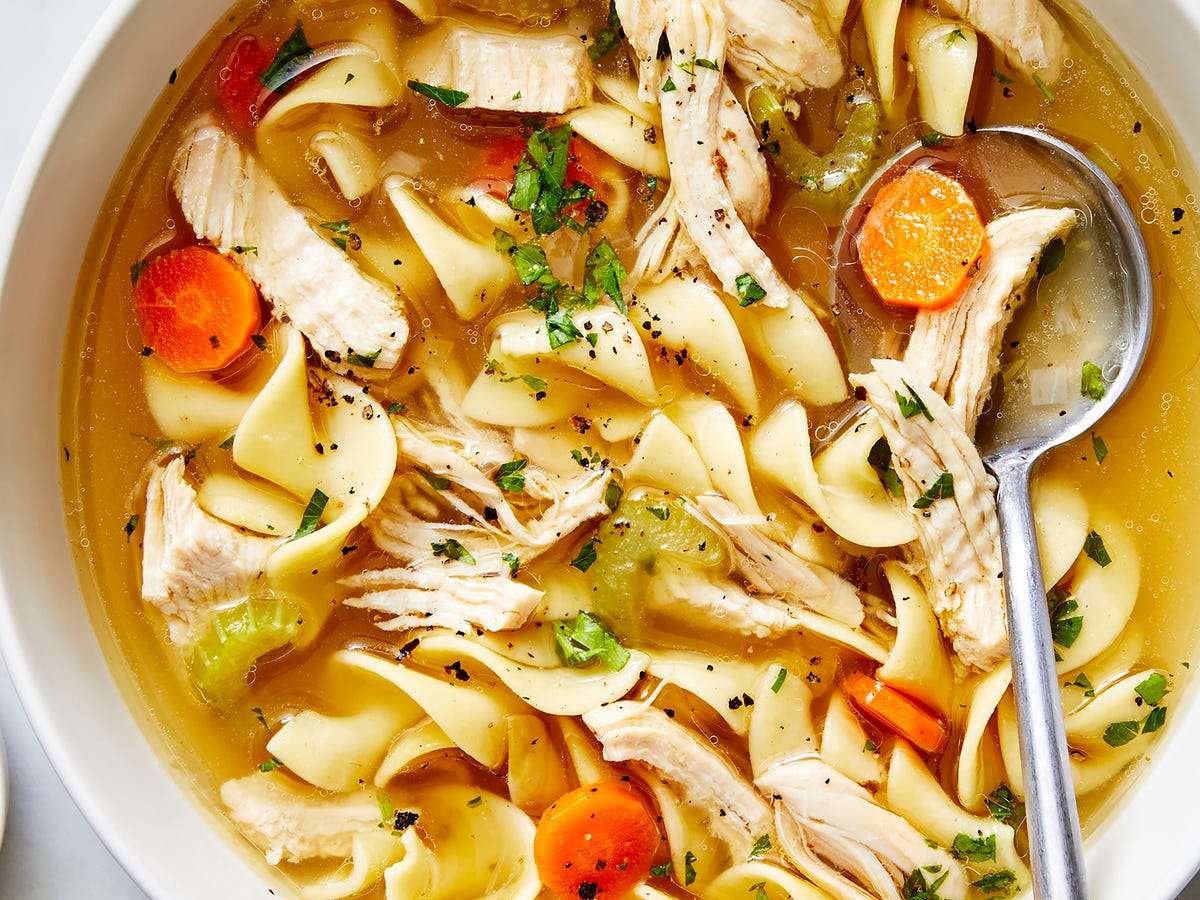
Chicken is the heart of the soup. Bone-in pieces such as thighs, drumsticks, or a whole chicken provide richer flavor because the bones release collagen during cooking. Noodles, typically egg noodles, add substance and comfort. Onions, carrots, and celery form the classic vegetable base, offering sweetness and balance. Garlic enhances aroma, while herbs like bay leaf, thyme, and parsley provide subtle depth.
Supporting Ingredients
Salt and black pepper season the soup, while water or light stock forms the cooking liquid. A small amount of oil or butter is used to sauté the vegetables and build initial flavor.
Optional additions such as ginger, lemon juice, or green onions can be included to adjust taste and freshness according to preference.
Step 1: Selecting and Preparing the Chicken
The quality of chicken directly affects the richness of the soup. Fresh chicken with bones and skin is ideal, as it produces a deeper, more satisfying broth. Before cooking, rinse the chicken under cold water and pat it dry. Trim excess fat if desired, though some fat adds flavor.
Using bone-in chicken allows natural gelatin to develop in the broth, giving it body without artificial thickeners. This careful selection is a key reason why a homemade chicken noodle soup recipe tastes far superior to store-bought versions.
Step 2: Preparing the Vegetables
Vegetables should be cleaned and chopped evenly to ensure uniform cooking. Onions are diced finely so they dissolve slightly into the broth. Carrots are sliced into rounds or half-moons for sweetness and color. Celery is chopped into small pieces to add subtle bitterness that balances the soup.
Garlic should be minced just before cooking to preserve its aroma. Fresh herbs can be tied together with kitchen string, making them easy to remove later.
Step 3: Building the Aromatic Base
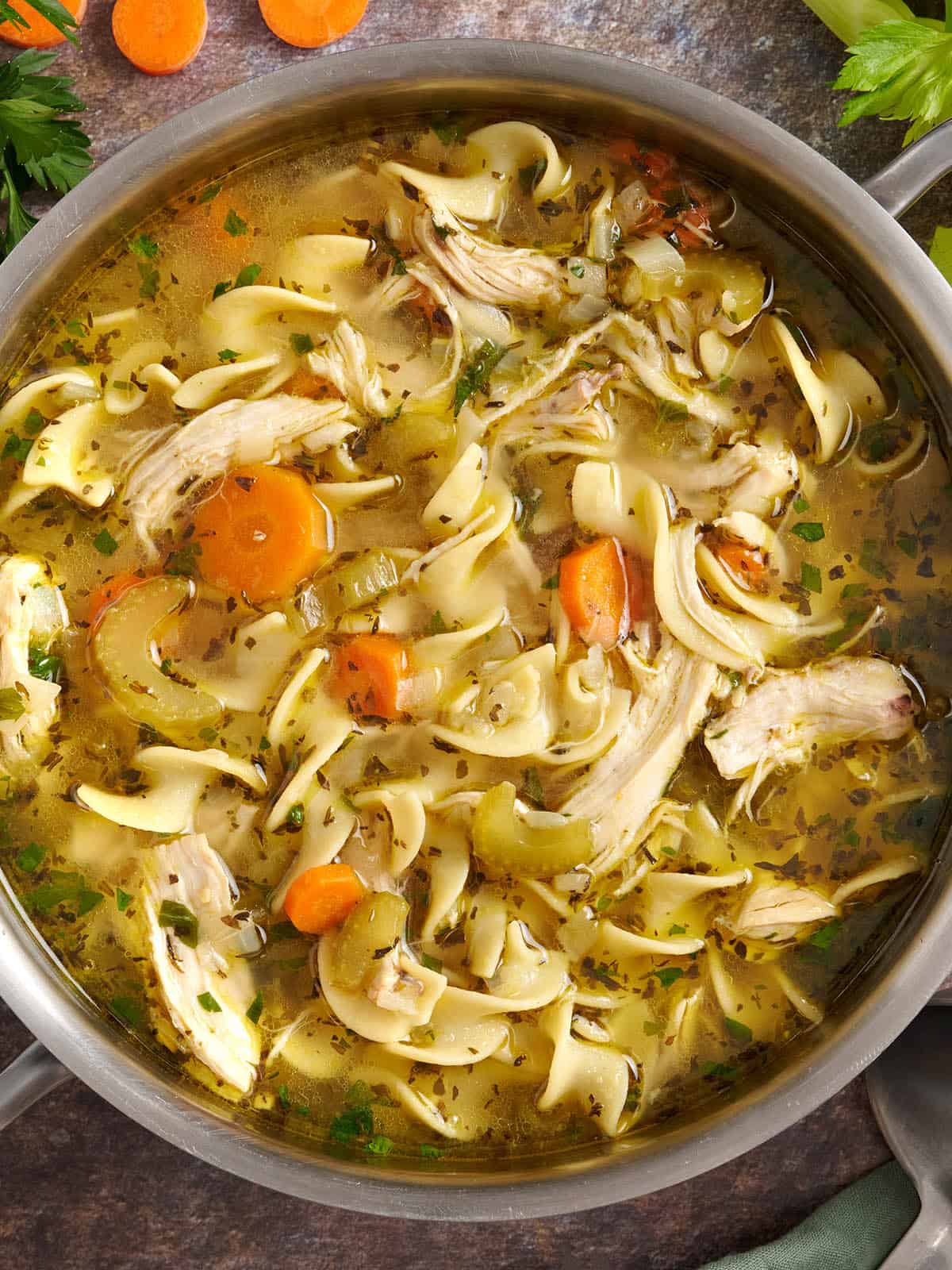
Heat a large, heavy-bottomed pot over medium heat and add oil or butter. Once warm, add the onions and cook slowly until they become translucent. This step releases natural sugars and forms the flavor base of the soup.
Next, add garlic and stir gently for a short time until fragrant. Avoid browning the garlic, as it can become bitter. Add carrots and celery, allowing them to soften slightly while absorbing the aromatic oils. This layered approach builds complexity early in the cooking process.
Step 4: Adding the Chicken and Liquid
Place the prepared chicken pieces into the pot with the sautéed vegetables. Pour in enough water or light stock to fully cover the chicken. Slowly bring the mixture to a gentle boil.
As the soup heats, foam may rise to the surface. Skimming this foam helps keep the broth clear. Add bay leaf, thyme, salt, and black pepper. Reduce heat to low and allow the soup to simmer gently.
This stage is crucial in developing the signature taste of a classic chicken noodle soup recipe.
Step 5: Simmering for Flavor Development
Allow the soup to simmer for 40 to 50 minutes. Gentle heat is essential. Rapid boiling can toughen the chicken and cloud the broth, while slow simmering extracts flavor gradually.
During this time, the chicken becomes tender, and the vegetables release their sweetness into the liquid. Taste the broth occasionally and adjust seasoning carefully, remembering that flavors will continue to deepen.
Step 6: Removing and Shredding the Chicken
Once the chicken is fully cooked, carefully remove it from the pot and place it on a plate. Let it cool slightly before handling. Remove the skin and bones, then shred the meat into bite-sized pieces using forks or clean hands.
Shredding the chicken ensures it distributes evenly throughout the soup, making each serving balanced and satisfying. Return the shredded chicken to the pot and stir gently.
Step 7: Cooking the Noodles
Noodles should be added toward the end of cooking to maintain their texture. Bring the soup back to a gentle simmer, then add the noodles. Stir occasionally to prevent sticking.
Cook until the noodles are tender but still firm, usually within 8 to 10 minutes. Overcooking can cause noodles to absorb too much liquid and become mushy.
This step completes the structure of the chicken noodle soup recipe, turning broth into a filling meal.
Step 8: Final Seasoning and Adjustments
Taste the soup once more and adjust salt and pepper as needed. Freshly chopped parsley can be added for color and freshness. If desired, a small amount of lemon juice can brighten the flavors without overpowering them.
Remove bay leaf and herb stems before serving.

Step 9: Serving the Soup
Serve the soup hot in deep bowls. The broth should be clear and aromatic, the chicken tender, and the noodles perfectly cooked. Chicken noodle soup pairs well with crusty bread, dinner rolls, or plain crackers.
This comforting presentation highlights the simplicity and warmth that make this dish timeless.
Nutritional Value of Chicken Noodle Soup
Chicken noodle soup provides balanced nutrition. Chicken offers lean protein, vegetables contribute vitamins and minerals, and the broth supports hydration. The soup is light yet filling, making it suitable for all ages.
Because it is homemade, sodium levels can be controlled, making this chicken noodle soup recipe a healthier choice than many packaged alternatives.
Common Mistakes to Avoid
One common mistake is boiling the soup too vigorously, which can make the chicken dry and the broth cloudy. Adding noodles too early often leads to overcooking. Under-seasoning can result in bland soup, while excessive seasoning masks natural flavors.
Patience and careful tasting throughout the process help avoid these issues.
Variations to Explore
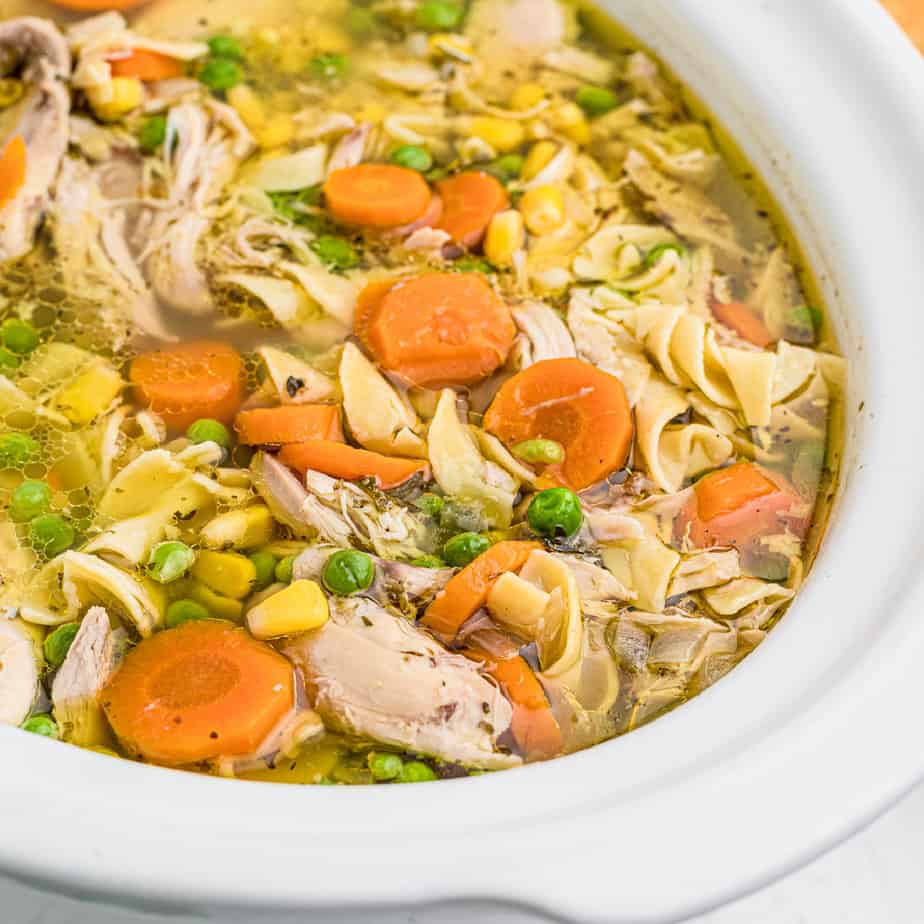
This recipe can be adapted easily. Adding vegetables such as spinach, peas, or zucchini increases nutritional value. Whole wheat or rice noodles offer different textures. Spices like ginger or turmeric add warmth and depth.
Creamy versions can be created by adding a small amount of milk or cream, though traditional versions remain light and clear.
Storage and Reheating Tips
Allow the soup to cool completely before storing. Refrigerate in airtight containers for up to three days. For freezing, store the soup without noodles and add freshly cooked noodles when reheating.
Reheat gently on the stove to preserve texture and flavor.
Why This Recipe Delivers Consistent Results
This chicken noodle soup recipe emphasizes gradual cooking, balanced seasoning, and thoughtful ingredient selection. Each step builds on the previous one, ensuring a flavorful and comforting final result.
By following this structured approach, you gain confidence and consistency, making this recipe reliable for everyday meals or special occasions.
Conclusion
Chicken noodle soup is more than just a meal; it is a symbol of comfort, care, and tradition. Preparing it from scratch allows you to connect with the process and enjoy flavors that are both familiar and deeply satisfying. With patience and attention to detail, anyone can master this dish.
This step-by-step guide provides everything needed to create a nourishing, flavorful soup that stands the test of time. Once you make it, this chicken noodle soup recipe is likely to become a staple in your kitchen, ready to bring warmth and comfort whenever it is needed.
Read More:- Chicken Noodle Soup: Step-by-Step Guide to Comfort & Flavor