

Introduction
People all throughout the world have used whole milk for a long time because it is creamy, tastes great, and is good for you. But a lot of people want a full milk alternative because of their diet, lactose intolerance, being vegan, or health concerns. Picking the best whole milk substitute may make a big difference in how dishes taste and feel, as well as in their overall healthiness. This article looks at the most common and useful alternatives to whole milk, how they differ nutritionally, and how to use them in everyday life.
Why People Need a Substitute for Whole Milk
There are a number of reasons why someone might want to find a substitute for whole milk. Lactose intolerance is a very common condition that affects millions of people throughout the world. People who have high cholesterol or who are attempting to cut back on saturated fat typically look for other options. People who are vegan or follow a plant-based diet need whole milk alternatives that don’t contain any animal components. Some people also choose alternatives for environmental reasons, such cutting back on dairy to lower their carbon footprint.
Common Alternatives to Whole Milk

There are different types of whole milk alternatives, and each one has its own pros and cons. Here are some of the most common choices:
Milk from Almonds
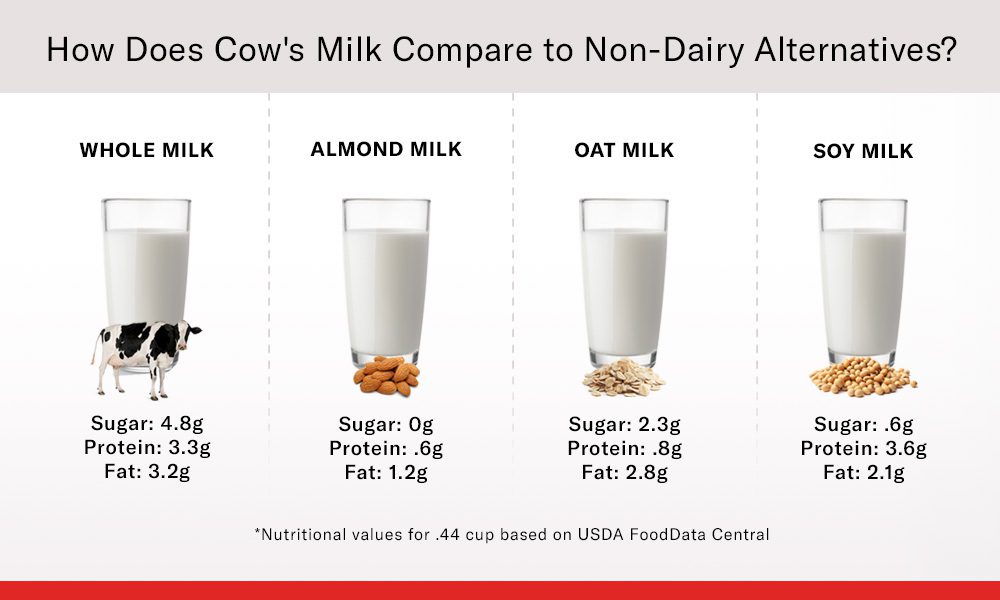
Almond milk is a whole milk alternative that comes from pulverized almonds and water. Compared to whole milk, it has fewer calories and fat and no lactose. Almond milk tastes like nuts and is good in cereals, smoothies, and baking. Fortified almond milk also has important vitamins including calcium and vitamin D.
Milk from Soybeans
Soy milk is a great alternative to whole milk because it has a lot of protein and can be used for cooking and baking. It has a creamy texture like cow’s milk and is often enriched with vitamins and minerals. Soy milk is great for savory meals because it doesn’t have a strong flavor.
Milk from Oats
Oat milk has become very popular as a substitute for full milk since it is creamy and has a hint of sweetness. It tastes great in coffee, cereal, and sweets. Oat milk is a healthy choice because it is high in fiber and several important minerals.
Milk from Coconuts
Coconut milk is a creamy alternative to whole milk that is made by mixing grated coconut meat with water. It has a unique, tropical, and somewhat sweet taste that makes it great for curries, desserts, and smoothies. Coconut milk has medium-chain triglycerides (MCTs), which may give you a rapid boost of energy, but it has less protein than cow’s milk.
Milk from Cashews
Another plant-based whole milk substitute that has a smooth texture and mild flavor is cashew milk. It works especially well in sauces, creamy soups, and coffee. Cashew milk has few calories and no cholesterol, but it doesn’t have a lot of protein unless it’s fortified.
Cow’s milk Without Lactose
Lactose-free cow’s milk is a great whole milk substitute for people who can’t handle lactose but still desire the flavor of regular milk. It has the same protein, calcium, and vitamins as conventional whole milk, but people who can’t digest lactose find it easier to digest.
Comparing the Nutrition of Popular Whole Milk Substitutes
When choose a whole milk substitute, it’s important to know the variations in nutrients. The table below shows how important nutrients compare for one cup (240 ml) of several substitutes:
| Milk Type | Calories | Protein | Fat | Calcium | Sugar |
|---|---|---|---|---|---|
| Whole Milk | 150 | 8g | 8g | 276mg | 12g |
| Almond Milk | 60 | 1g | 2.5g | 450mg | 7g |
| Soy Milk | 100 | 7g | 4g | 300mg | 4g |
| Oat Milk | 120 | 3g | 5g | 350mg | 16g |
| Coconut Milk | 45 | 0.5g | 4g | 40mg | 2g |
| Cashew Milk | 70 | 1g | 5g | 200mg | 1g |
| Lactose-Free Milk | 150 | 8g | 8g | 276mg | 12g |
This table shows that the best whole milk substitute depends on what you want to do with your diet, such lose weight, get more protein, or stay away from lactose.
How to Pick the Best Whole Milk Substitute for Cooking

When using a substitute for whole milk in recipes, the taste, texture, and cooking method are all very important. Soy milk and oat milk are two alternatives to whole milk that can be used for baking since they give structure and moisture. Almond milk or cashew milk is perfect for smoothies, coffee, and cereal. Coconut milk is best for curries and desserts that need a rich, creamy texture. particular substitutes, like coconut milk, can change the taste of particular meals, so it’s crucial to keep that in mind.
What are the Health Benefits of Whole milk Substitutes
There are many health benefits of using plant-based whole milk instead of whole milk. Almond or cashew milk has fewer calories and fat, which can help you control your weight. Soy milk has a lot of protein, which helps keep muscles strong. Oat milk has fiber that is good for your digestion, while coconut milk has healthy fats that can give you more energy. Lactose-free milk keeps the important nutrients in whole milk while making it easier for people who can’t digest lactose to drink.
The Effects of Milk Substitutes on the Environment
Making dairy milk has a big impact on the environment, such as releasing greenhouse gases, using a lot of water, and taking up a lot of space. Almond, oat, soy, or cashew milk are all plant-based whole milk substitutes that can help the environment. Oat milk is known for using less water and having a smaller carbon footprint than almond milk. People can help the environment by choosing eco-friendly milk substitutes.
Substitutes for Whole Milk made at Home
:max_bytes(150000):strip_icc()/easy-substitute-for-half-and-half-4144719-FINAL-e95090f0db7e416fab064912a1a4bd0d.jpg)
If you want to avoid chemicals and get fresh alternatives, you can produce a whole milk substitute at home. You may make almond milk, oat milk, and cashew milk by mixing the main ingredient with water, straining it, and possibly adding natural sweeteners or calcium and vitamins to make it stronger. You have more control over the ingredients when you make them at home, so you don’t have to worry about preservatives or extra sugars that are often included in store-bought items.
Table: How to Use Whole Milk Substitutes in Cooking
| Substitute | Best For | Notes |
|---|---|---|
| Almond Milk | Smoothies, cereal, baking | Mild flavor, low calories |
| Soy Milk | Baking, sauces, soups | High protein, creamy texture |
| Oat Milk | Coffee, desserts, cereals | Naturally sweet, good for frothing |
| Coconut Milk | Curries, desserts, smoothies | Rich and creamy, tropical flavor |
| Cashew Milk | Sauces, coffee, soups | Smooth texture, low protein |
| Lactose-Free Milk | Any traditional milk recipe | Retains taste and nutrients of whole milk, digestible |
How to Switch to Whole Milk Substitutes
It could take some time to become used to a whole milk substitute, especially the flavor and texture. To get used to the different flavors, start by mixing a little bit of the alternative with conventional milk. Try out different alternatives for different purposes, since each one works differently in recipes. Reading labels and choosing fortified foods will help you keep important minerals like calcium and vitamin D in your diet.
Whole Milk Replacement in Drinks
Coffee, tea, and smoothies are some drinks that need to be creamy. Oat milk and soy milk are great alternatives to full milk in coffee because they make lattes and cappuccinos foamy. Almond milk has a lighter texture and nutty taste that makes it great for smoothies. Coconut milk adds a tropical flavor that works well in drinks with fruit. These alternatives can make food taste better while still meeting dietary criteria.
Using a Whole Milk Substitute in Baking
When picking a whole milk substitute, you need to think about it carefully. Substitutes must have a similar amount of moisture, structure, and fat as whole milk. Because they have a neutral taste and a lot of protein, soy milk and oat milk are better for cakes, muffins, and breads. You can use coconut milk in rich sweets or dense cakes. You may need to change the amounts of additional ingredients to get the right taste and texture.
A Healthier and Fitter Alternative to Whole Milk
People who are into fitness typically look for whole milk alternatives that are good for their muscles and their health in general. Soy milk is heavy in protein, whereas almond and oat milk have fewer calories but still have important vitamins and minerals. Lactose-free milk is good for athletes who can’t digest lactose because it doesn’t lower their protein intake. Choosing the best whole milk substitute will help you stay energized, recuperate, and get the nutrients you need every day.
Table: How Healthy Milk Substitutes Are
| Substitute | Protein (g) | Fat (g) | Carbohydrates (g) | Ideal Use |
|---|---|---|---|---|
| Whole Milk | 8 | 8 | 12 | Everyday drinking, baking |
| Soy Milk | 7 | 4 | 4 | Protein-rich recipes |
| Almond Milk | 1 | 2.5 | 7 | Low-calorie beverages |
| Oat Milk | 3 | 5 | 16 | Coffee, baking |
| Coconut Milk | 0.5 | 4 | 2 | Curries, desserts |
| Cashew Milk | 1 | 5 | 1 | Smooth sauces, coffee |
| Lactose-Free Milk | 8 | 8 | 12 | Traditional recipes |
Conclusion
It’s important to choose the proper whole milk substitute for your health, cooking, and dietary needs. Almond, soy, oat, cashew, and coconut milk are all good options for people who can’t handle lactose or who follow a vegan diet. They are also tasty and healthy. People who are sensitive to lactose can drink lactose-free milk without having stomach problems. Knowing the nutritional differences and practical uses of each alternative will help keep meals healthy and tasty. A whole milk substitute can easily take the place of regular milk for baking, drinking, or everyday use. It can also fit specific demands and improve overall health.
Read More:- Whole Milk Powder: Benefits, Uses, Production, and Nutritional Guide