
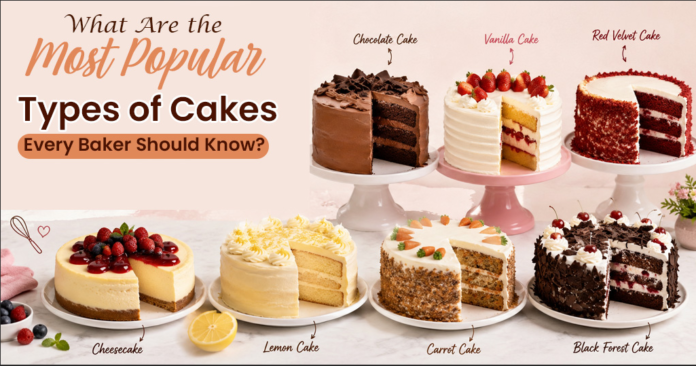
There is a moment, early in the baking journey, when a person stands in front of a finished cake and feels something shift. It is not just pride. It is the quiet recognition that flour, sugar, eggs, and technique have become something else entirely, something people will remember. That moment is worth chasing. But getting there takes more than enthusiasm. It takes knowing which cakes matter, why they behave the way they do, and what each one teaches.
This blog walks through the most popular types of cakes every baker should understand from the foundational sponge to the rich layered creations that define professional bakeries. It covers what makes each cake distinct, what skills it builds, and why serious bakers choose not to skip any of them. Understanding this landscape early makes the learning path far more intentional and for those exploring structured baking classes in Chennai, it also shapes how quickly foundational skills translate into real confidence at the bench. The sections ahead offer both a practical guide and an honest look at what it means to grow as a baker.
The Sponge Cake: Where Every Baker Begins
Most bakers meet the sponge cake first, and for good reason. It is deceptively simple. Eggs, sugar, flour and yet the margin between a light, airy crumb and a dense disappointment is razor thin. The sponge teaches patience. It teaches the importance of folding over mixing, of trusting the process rather than rushing it.
What the sponge builds, more than anything, is an understanding of structure. Once a baker understands how trapped air creates lift, every other cake starts to make more sense.
The Butter Cake: The Foundation of Classic Baking
If the sponge is technique, the butter cake is instinct. Rich, dense, and deeply satisfying, it relies on the creaming method, beating butter and sugar until pale and fluffy before anything else is added. This step is where many beginners lose patience, cutting it short and wondering later why the texture never quite lands.
The butter cake evolves beautifully with flavour additions. Vanilla, lemon zest, cardamom, it absorbs character willingly. Mastering it means mastering a method that applies to pound cakes, Madeira cakes, and dozens of variations beyond.
The Chiffon Cake: When Lightness Meets Richness
The chiffon cake sits at an interesting intersection. It uses oil instead of butter, which keeps it moist for longer. It folds in whipped egg whites, which gives it lift. The result is something that manages to feel both light and indulgent at once.
Bakers often underestimate it. The chiffon rewards those who respect the science behind it, understanding why the tube pan matters, why inverting the cake after baking is not optional, and how small errors in the meringue stage cascade into structural problems later.
The Genoise: The Cake That Demands Discipline
The Genoise is a European classic that shows up in layered tortes, opera cakes, and tiramisu-style desserts. It uses whole eggs whipped over heat to create volume, with no chemical leavening. The result is a firm, even crumb that absorbs soaking syrups without falling apart.
It is also one of the more unforgiving cakes to make. Deflate the batter during folding, and there is no fixing it. The Genoise shapes a baker’s discipline more than almost any other recipe.
Red Velvet and Layered Cakes: Building Towards the Professional
Red velvet has a story behind it, the chemistry of cocoa reacting with acidic buttermilk to produce a subtle flavour that goes far beyond food colouring. Layered cakes in general introduce a different set of challenges: even baking across multiple tiers, levelling, crumb coating and the structural logic of frosting.
These are the cakes that build confidence for professional contexts. They teach how visual presentation and technical precision work together, not separately.
The Mousse Cake and Entremet: Where Pastry Meets Architecture
At the more advanced end sits the mousse cake or entremet, mirror-glazed, multi-layered, temperature-sensitive creations that belong as much to the world of architecture as to baking. Getting here requires that all the earlier lessons have been absorbed.
These cakes are not just impressive to look at. They represent the full accumulation of a baker’s knowledge, flavour balance, texture contrast, precision timing, and creative vision working together in a single dessert.
What Knowing These Cakes Actually Means
Understanding the range of cakes is not about memorising recipes. It is about developing a baker’s vocabulary, a fluency with technique, texture, and flavour that allows for creativity rather than just replication.
Structured training environments give learners the practical exposure needed to work through each of these categories methodically under guidance, with real feedback and at a pace that builds genuine competence. For those ready to take that step, baking classes in Chennai Velachery at Zeroin Academy offer exactly that kind of grounded, hands on foundation.
The baker who stood in front of that first finished cake and felt something shift, they were not just proud of the result. They were beginning to understand the language. Every cake since has been another sentence in that conversation.